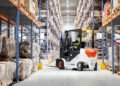
Electrification is likely one of the maximum transformative and irreversible developments within the forklift marketplace, writes Maya Xiao, Analysis Supervisor at Have interaction Research. The systemic shift from inside combustion engines (ICE) to electrical powertrains, predominantly lithium-ion (Li-ion) batteries, is essentially reshaping the trade’s aggressive dynamics, operational protocols, and environmental have an effect on.
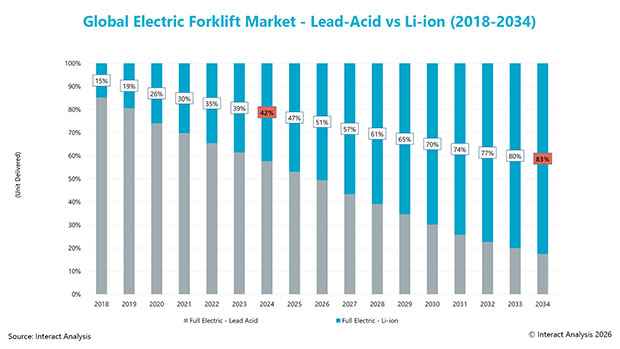
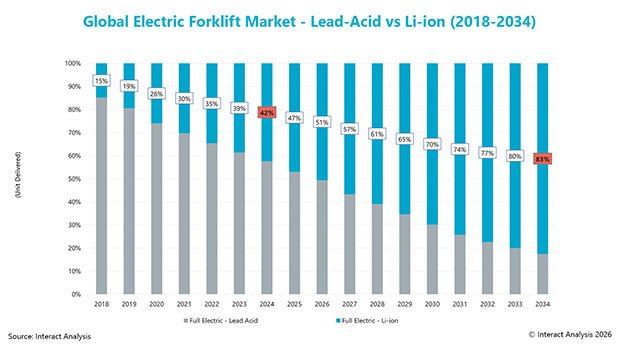
Our lately printed Forklifts – 2025 file charts the meteoric upward thrust of Li-ion forklifts and initiatives penetration charges will leap from roughly 32% in 2024 to over 70% by means of 2034 throughout the full-electric sector (which contains Li-ion and Lead-Acid fashions). A pivotal trade inflection level is predicted round 2026, when Li-ion generation is forecast to surpass lead-acid batteries in marketplace percentage throughout the electrical forklift phase.
Via 2034, a staggering 83% of all new electrical forklifts shipped globally will likely be powered by means of Li-ion batteries. This speedy transition is overwhelmingly pushed by means of the compelling operational and financial benefits of Li-ion generation.
The trajectory of electrification varies broadly throughout geographical areas, reflecting differing financial buildings, regulatory pressures, and marketplace adulthood.
China is the main engine of worldwide Li-ion penetration. Its Li-ion forklift shipments are projected to blow up from 26,436 devices in 2018 to over 1 million devices every year by means of 2034.
Europe is advancing swiftly, pushed by means of stringent emissions requirements and powerful company ESG mandates.
North The us lags considerably in the back of, with the USA no longer anticipated to achieve 50% Li-ion penetration till 2032.
In spite of the transparent enlargement trajectory for electrified forklifts, the transition from ICE and lead-acid machines faces important headwinds, similar to:
Top in advance capital outlay: The preliminary funding for Li-ion forklifts and the needful charging infrastructure stays a number one barrier, particularly for budget-conscious SMEs.
Complicated infrastructure necessities: Essentially the most crucial buyer friction level is electric infrastructure. Knowledge signifies 50-60% of charging installations require facility upgrades, which is able to upload as much as 25% to the overall challenge price.
Provide chain and experience gaps: Whilst making improvements to, the availability chain and after-sales marketplace for Li-ion parts aren’t but as mature as the ones for ICE or lead-acid applied sciences.
Forklift electrification has handed the tipping level, evolving from a forward-looking development right into a core technique that determines long run undertaking competitiveness. Proactive leaders who actively undertake electrification are leveraging important operational price benefits, enhanced sustainability credentials, and awesome provide chain resilience. Against this, enterprises that lag in the back of might face the twin pressures of price disadvantages and technological misalignment. As battery generation continues to advance, lifecycle price benefits building up, and charging infrastructure turns into extra subtle, electrical forklifts are swiftly transitioning from a “most popular choice” to the “default configuration” in international commercial and logistics sectors, redefining the long run panorama of subject material dealing with.