A $400 returnable container leaves your loading dock on Monday heading to a buyer website online 200 miles away. By means of Thursday, you want it again for the following cargo cycle.
You name the buyer and so they take a look at the dock and warehouse flooring, however no good fortune. The container will have been moved to the overflow backyard, picked up via a distinct motive force or left at the back of a stack of pallets.
As a result of those boxes disappear into distribution networks the minute they roll out the door, those eventualities play out all week lengthy at amenities operating returnable container techniques. Some boxes make it again on time table, however others vanish for weeks or months, sitting idle someplace within the community whilst operations groups scramble to fill orders with out them.
Attempting to make use of spreadsheets and get in touch with calls to trace those property is a dropping fight, particularly when masses or 1000’s of boxes are circulating throughout more than one states. After all, amenities run brief on boxes they already personal whilst procurement orders needless replacements.
On this Q&A, Loic Barancourt, CEO at Virtual Subject, explains how hybrid IoT monitoring is helping firms to find lacking boxes, cut back losses from 20% to lower than 1%, and forestall throwing cash at alternative orders.
Q: What’s riding the desire for higher visibility on returnable boxes?
A: We see this within the postal trade all through height seasons like Christmas. Tier one traders stay returnable packaging like cages, which creates issues as a result of postal operators can’t transfer parcels speedy sufficient. Some shoppers additionally use returnable packaging to control their very own work-in-process stock.
In case you have visibility, you’ll be able to set laws like, ‘don’t stay my returnable packaging longer than a couple of weeks.’ When you’ll be able to set up peaks higher, you lose fewer property and at all times have sufficient available when you want them maximum.
Q: At what worth level does monitoring make monetary sense?
A: When boxes price $300 to $400 every, the industry case stacks up lovely briefly, with go back on funding (ROI) operating up into the hundreds of thousands of greenbacks in some instances. For crates that price $10 or $20 every, the economics paintings another way and you want different approaches, however we see the ROI operating for returnable packaging in each closed loop and semi-closed-loop setups.
Q: How does hybrid monitoring cut back prices in comparison to monitoring each and every container in my opinion?
A: If property commute in cohorts of 20 or 30 at a time in a closed loop, you’ll be able to equip best 10% with mobile trackers and fix the steadiness with more cost effective Bluetooth tags. Those hybrid networks ship the insights with industrial-grade apparatus that may function for 10 years. You deploy as soon as and get a 10-year answer. This way reduces the price of generating information for provide chains the place property transfer in combination.
Q: What are the choices to battery-powered trackers?
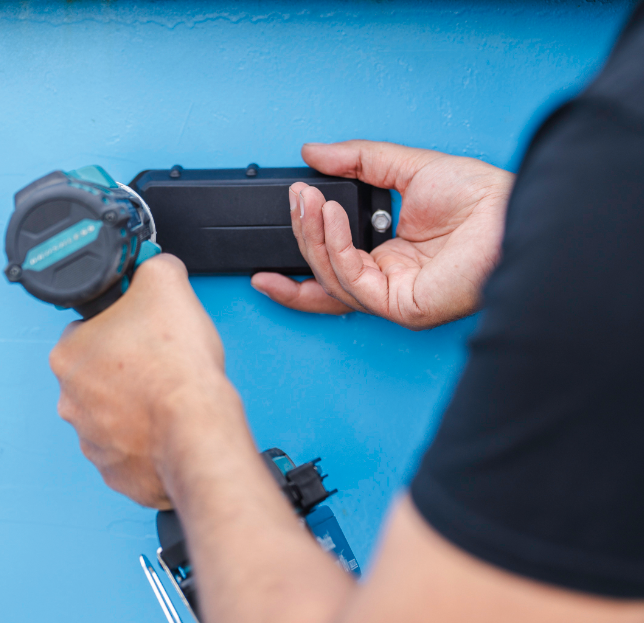
A: You might want to use bar codes, however any person has to manually scan the ones codes. You might want to set up RFID gates however that doesn’t paintings with disbursed provide chains. The one choice that makes financial sense is battery-powered trackers with SIM playing cards that attach for seven to ten years, reporting two to 4 occasions day by day and telling you the place property are indoors or outside. Upload Bluetooth to that tracker, and it turns into a gateway that connects to tags on different boxes within the cohort.
Q: Which industries are adopting this generation?
A: At this time, automotive and glass producers lead adoption as a result of in the event that they don’t have the precise returnable packaging on the proper position on the proper time, manufacturing traces prevent. Whilst you task glass, it must be saved on an A-frame as a result of you’ll be able to’t put it at the flooring. With out sufficient A-frames, manufacturing would possibly prevent for a day or a number of days. We additionally see firms that use intermediate bulk boxes (IBCs) embracing the generation. They won’t have 1000’s of boxes in play, however figuring out the place those huge, reusable boxes are at any given time generally is a recreation changer for them.
Q: How a lot do firms normally lose in the event that they’re no longer monitoring their reusable boxes?
A: Some companies lose 20% in their totes once a year. With monitoring, that drops to lower than 1%. The reason being easy: They know precisely the place their boxes are and they are able to make a decision and get them again. Take the corporate that rents IBCs to smaller operations. Neatly, all IBCs glance the similar, because of this competition would seize them and stick them in their very own warehouses. Now the ones condo firms can name and say, ‘OK, I see you could have my boxes. Carry them again.’