Forklifts are crucial gear in lots of industries, enabling environment friendly subject material dealing with and operations. On the other hand, their operation comes with inherent dangers, making protection protocols paramount. One of the essential protection measures for forklift operators is the constant use of seat belts. This newsletter explores the significance of forklift seat belt protection, the risks of neglecting them, and easiest practices to make sure operator coverage.
The Evolution of Seat Belt Consciousness
If you’re sufficiently old to bear in mind driving in a automobile all over the Sixties throughout the mid-Eighties, you’ll most definitely recall no longer all the time being diligent about dressed in a seat belt. It wasn’t till 1985 that the NHTSA and the Advert Council introduced promoting campaigns with Vince and Larry, the crash take a look at dummies, to focus on the life-saving advantages of seat belts. The advertisements graphically demonstrated the serious penalties of no longer buckling up.
In 1993, the ‘Click on It or Price ticket’ program used to be presented in North Carolina. This initiative steadily unfold around the nation, and by way of 2004, all states and territories participated. These days, seat belts are identified as some of the efficient security measures, saving tens of hundreds of lives every 12 months.
If seat belts are universally stated as crucial in passenger automobiles, why do such a lot of forklift operators nonetheless overlook to make use of them?
Even one tale like that is one too many:
On July 2, 2001, a 17-year-old male warehouse laborer (the sufferer) used to be fatally injured when the sit-down kind forklift he used to be running tipped over and beaten him. The sufferer it seems that misplaced keep watch over of the forklift, which had a load on its forks and the mast totally prolonged, as he used to be creating a proper flip, inflicting the forklift to tip over 90 levels onto its left facet.
The unrestrained sufferer used to be beaten beneath the prolonged growth/mast of the forklift. Fireplace division body of workers spoke back seven mins after receiving a 911 name from corporate body of workers and, along side cops, pulled the sufferer transparent as corporate staff used two forklifts to boost the forklift from the sufferer.
The sufferer used to be subconscious and bleeding from head accidents. First assist used to be equipped by way of emergency clinical services and products (EMS) body of workers, and the sufferer used to be transported to a space health center, the place he used to be pronounced useless at 1:35 p.m., roughly 25 mins after the incident.
Why Forklift Seat Belts Are Crucial
The Possibility of Tip-Overs
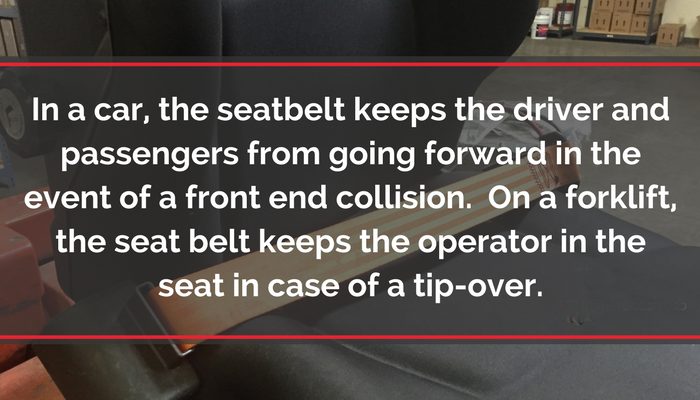
Tip-overs are the main reason behind deadly forklift injuries. Forklifts have a prime heart of gravity, making them susceptible to tipping if an operator turns too temporarily, drives on asymmetric surfaces, or carries an imbalanced load. When a tip-over happens, the intuition to leap may also be fatal, as operators incessantly can’t get away the device in time.
A seat belt helps to keep the operator securely throughout the protecting confines of the forklift. As a substitute of being ejected and beaten, the operator stays within the seat, considerably decreasing the danger of significant harm or loss of life.
The Fact of Forklift Injuries
Annually, forklift-related injuries lead to serious accidents and fatalities. Many of those incidents contain operators who weren’t dressed in seat belts. Tragic tales like the only above illustrate simply how temporarily an avoidable coincidence can flip deadly when seat belt protection is omitted.
Commonplace Causes Forklift Operators Skip Seat Belts
Even with transparent dangers, some forklift operators nonetheless overlook to put on seat belts. Right here’s why:
- False Sense of Safety – Some operators consider that forklifts are too robust to tip over or suppose they are able to react temporarily sufficient to keep away from harm.
- Complacency – The ones operating in the similar surroundings on a daily basis would possibly suppose injuries received’t occur to them.
- Discomfort or Inconvenience – Some operators keep away from seat belts as a result of they in finding them restrictive or consider fastening them slows down their paintings.
On the other hand, no quantity of self assurance or revel in can save you an coincidence. Seat belts will have to all the time be worn—no exceptions.

Forklift Seat Belt Necessities and OSHA Rules
Whilst explicit seat belt laws for forklifts won’t all the time be detailed, protection companies require employers to get rid of identified hazards within the place of work. Failing to put in force seat belt use may end up in citations, fines, and most significantly, greater chance to employees. Companies are chargeable for making sure that forklift operators agree to protection requirements, together with obligatory seat belt utilization.
Perfect Practices for Implementing Forklift Seat Belt Protection
1. Prioritize Coaching
Ensure that all forklift operators perceive the hazards of no longer dressed in a seat belt and the way it can save their lives. Common protection coaching will have to emphasize the significance of securing the seat belt each and every time they function the automobile.
2. Behavior Common Protection Inspections
Supervisors will have to robotically test that seat belts are in just right situation and that operators use them constantly. Common forklift protection audits can assist make stronger compliance.
3. Foster a Protection-First Tradition
Inspire a place of work tradition the place protection is non-negotiable. Acknowledge and praise operators who practice protection protocols and make it transparent that seat belt use is obligatory.
4. Cope with Operator Issues
If operators in finding seat belts uncomfortable or impractical, examine choice designs that strengthen convenience whilst keeping up protection. Taking out stumbling blocks to compliance can build up seat belt utilization charges.
The Backside Line: Buckle Up Each Time
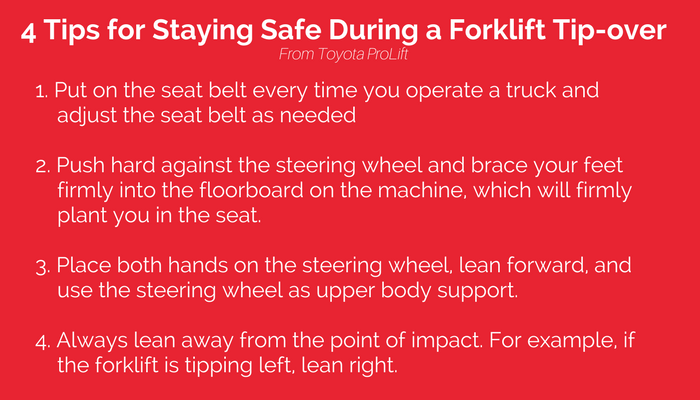
Forklift seat belts aren’t not obligatory equipment—they’re life-saving gadgets. Operators and employers alike will have to acknowledge their significance and make sure compliance. Through making seat belt use a constant addiction, offices can considerably scale back accidents and fatalities, making sure that each and every operator will get house safely on the finish of the day.
A couple of seconds is all it takes. Buckle up. It’s value it.