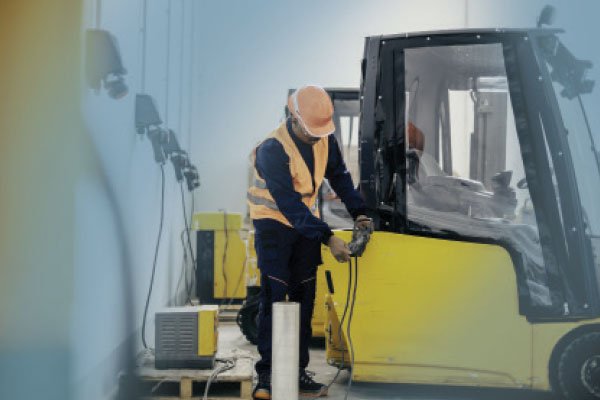
Whether or not they’re unloading inbound trailers, feeding pallet glide rack, operating freezer aisles, replenishing select faces or shuttling product around the backyard within the rain, raise vans stay achievement operations shifting. With out them, corporations wouldn’t be capable to stay dock doorways turning, stay select modules equipped, organize overflow garage or get outbound rather a lot staged and shipped on time table.
Fleets glance other from one operation to the following. In a smaller DC, one or two counterbalanced vans and a few pallet jacks can take care of receiving, replenishment and transport in addition to they did 10 years in the past. In a mid-sized operation, more recent achieve vans, orderpickers, pallet vans, tow tractors and forklifts function throughout more than one shifts, temperature zones and dock schedules.
For massive warehouse operators, fleet managers observe loads of automobiles throughout more than one structures, together with repairs wishes, charging or fueling necessities, operator assignments, usage patterns and substitute schedules.
In some ways, the raise truck continues to be the similar previous warehouse workhorse that it at all times used to be. It seems like its predecessors and handles a lot of the similar paintings, however the setting round those automobiles has been in a relentless state of flux. Hard work constraints, the warehouse automation increase, the e-commerce surge and SKU proliferation have all affected achievement operations.
Raise truck distributors have spoke back with extra electrical choices, lithium-ion batteries, stepped forward operator controls, higher ergonomics and complicated telematics that give managers extra visibility into fleet utilization. As a result of that, good fleet acquisition plans now issue within the truck itself, the ability supply, the operator, the upkeep plan and the automobile knowledge.
To know how corporations are making the ones selections this yr, Peerless Analysis Crew (PRG) carried out Fashionable Fabrics Dealing with’s “2026 Raise Truck Acquisition & Utilization Find out about.” The learn about appears at what raise vans corporations are lately the usage of, the apparatus they plan so as to add, how they’re paying for the ones automobiles, how the financial system is affecting the ones plans, and the way fleets are being maintained and controlled.
High quality and value depend maximum
This yr’s record is in response to responses from 117 certified Fashionable Fabrics Dealing with mag subscribers, all of whom lend a hand evaluation and buy raise vans for his or her amenities. Respondents constitute a spread of facility sorts, together with production operations (36%), DCs (33%) and warehouses (19%). Respondents paintings in a spread of industries, together with production (69%), retail industry (10%), wholesale industry (7%) and different non-manufacturing companies (7%). On moderate, their corporations have 247 staff and $465 million in annual revenues.
Electrical-powered rider vans lead the pack in 2026, with 58% of businesses working counterbalanced, sit-down and stand-up fashions. Respondents additionally use electric-powered pallet vans like walkies, riders, low- and high-lift fashions and achieve sorts (43%); and electric-powered narrow-aisle vans, together with orderpickers, side-loaders, turret vans, stackers and achieve vans (31%).
Interior combustion-powered (IC) counterbalanced raise vans with cushion tires are in use at 30% of businesses. Any other 21% use IC-powered counterbalanced raise vans with pneumatic tires, whilst 11% use tough terrain raise vans. The unfold underscores how numerous raise truck fleets stay, whilst electrical fashions take the highest spots on this yr’s learn about.
Fleet measurement appears other from one respondent to the following. Corporations are the usage of 21 raise vans on moderate, the ones automobiles are about 10 years previous and the oldest truck within the fleet is 17 years previous on moderate. Thirty-six p.c have 3 to 9 raise vans of their fleets, whilst 24% have fewer than 3. Better fleets also are a part of the learn about, with 12% reporting greater than 100 vans, 11% reporting 25 to 49, and 10% reporting 10 to fourteen.
Product high quality and value most sensible the record for firms comparing raise vans for acquire or rent. Seventy-two p.c of respondents say the standard of raise vans and portions is necessary, whilst 70% level to buy value and 55% cite protection. Respondents additionally weigh the price to run the truck over its lifetime (55%), portions availability (53%), carrier reaction time (45%) and the connection with native sellers (41%).
Prolonged substitute timelines
Corporations are stretching their raise truck substitute timelines this yr. The common substitute timeline is now 8.3 years, up from 7.9 years in 2025 and seven.2 years in 2024.
Thirty-five p.c of respondents say they normally exchange their raise vans after 10 years or extra, up from 27% closing yr. Any other 22% exchange vans after 8 to not up to 10 years, in comparison to 18% in 2025.
Nineteen p.c of businesses exchange raise vans after 5 to not up to 8 years, down from 25% closing yr, and 9% exchange vans after not up to 5 years, in comparison to 16% in 2025. Those longer substitute timelines might mirror a extra wary strategy to fleet spending in 2026 as corporations stability funds constraints, upper apparatus prices, tariff issues and different uncertainties.
Financial and marketplace components aren’t affecting each fleet acquire the similar manner. In truth, 41% of respondents say the financial system or marketplace components have very little have an effect on on how they achieve raise vans. Any other 30% say the ones components have some have an effect on, whilst 29% say they’ve an ideal have an effect on. Respondents additionally shared insights on how present financial components affect buying selections, with
raise truck acquisitions nonetheless basically coming right down to operational want.
“We want it once we want it,” one respondent says. Different survey individuals pointed to timing, budgeting and marketplace prerequisites. “Financial prerequisites affect our timing and budgeting for raise truck replacements,” someone else says. “Marketplace components equivalent to apparatus pricing, lead instances and repair/ portions availability can have an effect on once we transfer ahead with a purchase order.”
Fleet construction and day by day control
Past substitute timelines, the learn about additionally checked out how corporations construction their fleets, achieve new vans and take care of older apparatus as it’s got rid of from common carrier. This yr, 43% of businesses are running a core fleet of raise vans that they use steadily, down from 51% closing yr. Once they achieve new vans, 68% acquire them, 18% rent them and 15% use each strategies.
Greater than part of respondents (56%) are purchasing new vans to exchange the ones lately getting used, whilst 44% are including to their present fleets. And when it’s time to retire or exchange raise vans, 39% of respondents resell them, 38% flip them over to the broker when the brand new vans are delivered, and 35% retailer them in case they want them later. Any other 14% stay changed vans and use them for portions.
The learn about additionally checked out 3 key day by day fleet control problems that have an effect on
how raise vans are used, supported and maintained:
• Operator coaching: Seventy-eight p.c of businesses say they educate raise truck operators via an interior coaching program. Any other 26% use their broker for coaching, whilst 14% use an unbiased carrier supplier.
• Self sustaining generation: Twenty-four p.c of respondents say they’re the usage of or plan to make use of independent or semi-autonomous forklift generation, up from 18% in 2025. The rest 76% say they don’t seem to be.
• Upkeep: Corporations basically care for their raise vans through outsourcing to a boost truck broker (43%), the usage of in-house body of workers (29%), or outsourcing to a repairs or carrier contractor (22%).
Monitoring the fleet
Fleet control device adoption charges proceed to climb, with 49% of respondents the usage of the generation. Of the ones customers, 80% observe repairs historical past, 71% observe repairs prices, 63% observe protection incidents and 63% observe running prices. Others use the device to watch usage (57%), truck age (40%) and uptime (39%).
Corporations record sure effects from their fleet control generation. In 2026, 40% say their implementation has been very a success, 34% name it quite a success and 20% say it’s been extraordinarily a success.
The write-in responses upload some colour to these numbers. Corporations that aren’t the usage of or making plans to put into effect fleet control device cite implementation value, loss of want, current interior techniques and small fleet measurement. The ones the usage of or enforcing the device say their demanding situations come with funds, knowledge consistency, getting knowledge into the device, holding data present, proprietor improve and turning fleet knowledge into usable knowledge.
Long run acquisitions stay lively
Over the following 12 to 24 months, 58% of respondents say they plan to shop for or rent new raise vans (as opposed to 64% in 2025). Amongst the ones making plans acquisitions, 37% be expecting to shop for or rent two to 4 vans, 26% will achieve one truck and 18% be expecting so as to add 5 to 9 vans. On moderate, respondents plan to shop for or rent 5.5 vans over the following 24 months.
Long run spending plans are extra modest at this time in comparison to closing yr. Over the following three hundred and sixty five days, 57% of respondents be expecting to spend not up to $50,000 on raise vans. Any other 15% plan to spend $100,000 to $249,999, whilst 10% be expecting to spend $50,000 to $99,999. The common anticipated spend in 2026 is $182,290, down from $214,110 in 2025.
The survey additionally checked out how corporations are buying raise vans. Sellers stay the main gross sales channel, with 82% of respondents purchasing direct from sellers and 21% getting their automobiles proper from the producer.
Corporations also are making plans for the spare portions had to stay their raise vans in carrier. Wheels and tires most sensible the record at 59%; adopted through batteries and battery equipment (58%); chemical compounds, lubricants and oil (47%); and tune-up portions (40%). Others be expecting to shop for brake parts (37%), protection apparatus (26%), LPG apparatus (23%) or seats (21%) within the subsequent yr.